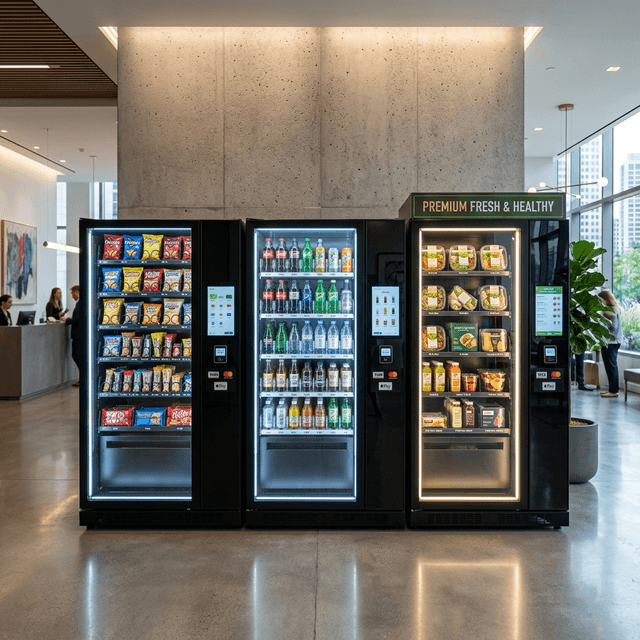
A workplace vending machine should solve a practical problem: giving people convenient access to snacks and drinks during the hours they actually work. For an Orlando employer, that could mean an office near Downtown, a healthcare break room in Lake Nona, a hospitality staff area along International Drive, or a warehouse with staggered shifts. Each setting deserves a different plan.
Start with how the room will be used, rather than choosing equipment from a photograph. This guide explains how to compare vending, micro markets, coffee, water, and pantry options, what information to gather, and which questions to ask before approving an installation. Availability and no-cost placement depend on the location assessment and agreed service terms.
1. Measure daily demand, not total payroll
The most useful starting number is the number of people who can realistically use the break room each day. A company with a large payroll may have a small on-site audience because employees work remotely or spend their day in the field. A smaller facility can have steady demand if the same team works long shifts without convenient alternatives nearby.
Make a simple attendance estimate for a normal week. Record employees present on each shift, contractors with access, visitor traffic where relevant, and the busiest break periods. Separate a typical day from special events. This gives the operator a clearer picture than a single headcount and helps avoid installing more equipment than the location can support.
For a rotating schedule, describe the handover between shifts. If overnight workers cannot access the daytime break room, a machine in that room will not solve their problem. Likewise, a public lobby and a staff lounge have different audiences, payment expectations, and security requirements. Explain who can enter the space and when it is open.
Ask employees what is missing today. A short preference survey can identify common requests without promising every product. Include drinks, filling snacks, coffee preferences, budget considerations, and interest in fresh food. Keep individual medical details out of the survey. Product labels and supplier information should guide dietary decisions.
2. Choose vending or a micro market for the actual space
Traditional vending machines keep products enclosed and dispense an item after payment. A combination machine can be a useful starting point when floor space is limited. Separate snack and drink machines offer another arrangement when demand and the room layout justify it. Confirm the exact model, capacity, payment methods, and accessibility before agreeing to placement.
A micro market uses open shelves or coolers with a checkout system. Customers can inspect packaging and choose several items before paying. It can offer a broader product mix, but that does not automatically make it the right choice for every site. Access control, inventory loss, refrigeration, connectivity, and the amount of room available all affect suitability.
For a controlled employee space, review whether open shelves would be easy to supervise and maintain. For a public-facing area, discuss how payment compliance and equipment security will work. There is no universal employee threshold that guarantees a micro market will succeed. The operator should evaluate attendance, buying patterns, access, and restocking costs together.
Compare options with the same questions: what products fit, what happens during a payment failure, how customers request refunds, who maintains the equipment, and how service changes if attendance falls. Ask for a layout showing the proposed footprint, customer approach, doors, and maintenance access. A neat rendering should be supported by practical measurements.
3. Match the plan to your Orlando workplace
A Downtown Orlando office may need to coordinate deliveries with building management, elevator access, loading rules, and shared amenities. Before choosing equipment, clarify whether the vending area serves only one tenant or the whole building. Establish who approves the placement and who is responsible for electricity and access outside office hours.
For a Lake Nona clinic or healthcare workplace, distinguish staff areas from patient and visitor areas. Staff working different schedules may need convenient refreshments when other food options are unavailable. Ask the facilities team about cleaning procedures, installation permissions, and where maintenance can take place without interrupting daily operations.
Near UCF and Research Park, an office or campus-adjacent workplace should account for changes in attendance during holidays, academic breaks, and project cycles. A stable product mix and a flexible review schedule can be more useful than assuming the busiest week represents the entire year. Campus placements may require separate institutional approvals.
Hospitality employers in the International Drive corridor should identify the people the equipment is intended to serve. A back-of-house staff space differs from a guest lobby. Review shift access, peak break times, staff-only entry, and delivery routes. References to a district or attraction describe location context; they do not imply a relationship with a particular employer or venue.
Warehouses and distribution workplaces should check walking distance from work areas, loading activity, and staggered breaks. A remote corner of a large building may technically have room for a machine while being inconvenient for users. Consider how people move through the facility and whether equipment service can happen without crossing restricted or active work zones.
4. Understand what no-cost placement includes
Some qualifying vending locations can receive equipment without an installation charge to the host. That arrangement depends on the operator accepting the site and on the written agreement. It does not mean every break room service is free. Employees generally pay for vending purchases, while employer-sponsored pantry programs involve a budget paid by the business.
Ask the provider to separate equipment placement, installation work, product purchases, maintenance, and any host responsibilities. Clarify whether electrical work, plumbing, networking, wall repairs, or furniture are excluded. Coffee and water services can involve different equipment and supply costs. You should be able to explain the proposal to your facilities and finance teams without guessing.
Read the terms for contract length, cancellation, relocation, and equipment removal. Discuss what happens if your business moves, changes operating hours, or reduces attendance. Do not assume a no-cost setup means there is no agreement or minimum requirement. Written terms should describe the arrangement that applies to your specific site.
If revenue sharing is discussed, ask how sales are measured, what deductions apply, when statements are issued, and whether any minimums or conditions exist. Compare the quality of the full service plan as well as financial terms. A percentage on paper is less useful if the equipment, stocking, or support does not meet the workplace's needs.
5. Check the room before setting an installation date
Measure the space and the full delivery route. Doorways, corridors, elevators, turns, loading access, and stairs can determine whether a machine can reach the proposed room. Include the clearance needed to open equipment doors and perform maintenance. Share photos of the room and access route, avoiding images that expose employee or customer information.
Confirm electrical requirements for the exact equipment with the operator and your facilities team. Check the intended outlet location and whether a dedicated circuit or other preparation is required. Coffee and water equipment may need plumbing, drainage, or additional permissions. Do not treat every machine as interchangeable or assume the existing room is ready for every service.
Review how people will approach the equipment and reach the payment interface. Keep doors, exits, circulation paths, and required clearances usable. If your site has accessibility requirements, have the appropriate facilities professional review the layout and equipment. The quote process should identify these considerations before an installation crew arrives.
Payment systems may need cellular reception or an approved network connection. Test connectivity in the actual room instead of relying on reception elsewhere in the building. Ask what functions remain available during an outage, how pricing changes are managed, and who contacts support when checkout stops working. Assign a site contact who can provide access for service.
6. Build a product and restocking plan
Begin with a manageable selection based on attendance and employee preferences. A balanced mix can include familiar snacks, lower-sugar drinks, water, and more filling items where equipment allows. Fresh food requires a different conversation about refrigeration, turnover, shelf life, and service. It should be considered only when the operator can support the proposed setup.
Ask how product requests are evaluated and how often the assortment is reviewed. An initial survey is useful, but actual purchases and feedback can show a different pattern. Agree on a way to request changes without turning every individual preference into a stocking commitment. Seasonal attendance and changing shifts can also justify adjustments.
Confirm where users find ingredients and allergen information. Open shelves allow customers to examine packaging; enclosed vending may require another way to review relevant product details. Do not describe a machine or room as allergen-free unless that claim has been independently established. Individual products and equipment arrangements need their own assessment.
The restocking schedule should reflect demand and access. Ask how the operator notices low inventory, who reports an empty machine, and how holiday schedules are handled. Remote monitoring, where available, is helpful but does not replace a workable service route. Discuss the plan for busy periods and unexpected closures before they become a problem.
7. Consider coffee, water, and employer-paid pantry service
A workplace that already has suitable vending may need better coffee or drinking water rather than another snack machine. Compare coffee equipment by the drinks employees want, cleaning responsibilities, supplies, and ongoing cost. A compact office has different needs from a break room where many workers arrive during the same short interval.
For water service, clarify whether the proposal uses bottled products, a filtered dispenser, or another arrangement. Ask about installation, consumables, cleaning, filter maintenance, and who handles interruptions. Keep the discussion tied to actual equipment specifications and site requirements. A general service description is not enough to approve facilities work.
Employer-paid pantry service can provide snacks or drinks without charging employees per item. Set a spending limit and specify how replenishment and usage are reviewed. The business should understand ordering, substitutions, storage, and invoicing. A pantry budget should reflect realistic consumption rather than an open-ended promise to keep every preference available.
These services can be combined, but add them because they solve a clear need. It is reasonable to begin with one equipment type and review results before expanding. Ask for a phased proposal if the full break room plan exceeds current space or budget. This makes priorities visible and helps avoid buying services the team will not use.
8. Agree on support and review the results
Before launch, identify the contact for equipment faults, payment issues, refunds, and product concerns. Users should not have to search through old emails to report a failed purchase. Ask whether contact details can be displayed on the equipment and whether the site manager receives an escalation path for unresolved problems.
Discuss support hours and expected response arrangements in the agreement. A machine accessible overnight does not automatically mean a technician is available around the clock. Describe your own operating schedule so the provider can explain what support applies. Record how urgent issues differ from routine requests and how access for repairs will be arranged.
After the initial operating period, review what is working. Look at frequently requested items, recurring outages, stock gaps, and feedback from each shift. If sales information is available, use it alongside employee comments. A busy machine with frequent complaints may need changes just as much as a lightly used machine.
Give the operator timely notice about building works, closures, and attendance changes. Decide who inside your business owns the relationship and who takes over when that person is away. A simple record of service requests and agreed changes can keep facilities, HR, and finance aligned without adding unnecessary administration.
9. Prepare a useful quote request
A clear quote request helps the provider evaluate your location and explain the next step. You do not need a finished design. Start with the basics below and flag anything uncertain. The operator can then ask focused follow-up questions instead of making assumptions about your building or workforce.
- Business name, site address or ZIP code, and a contact who can discuss placement.
- Typical daily attendance, shift patterns, and whether visitors use the space.
- The service you want: vending, micro market, coffee, water, pantry, or a combination.
- Available room dimensions, delivery access, and known electrical or network constraints.
- Product preferences and whether purchases are employee-paid or employer-funded.
- Your target date, current equipment, and any existing agreement that affects replacement.
If you are comparing several proposals, share the same information with each provider. Ask each one to explain equipment, stocking, costs, support, eligibility, and terms in writing. This makes it easier to compare the actual service rather than differences in presentation. Keep unanswered questions visible until they are resolved.
Plan a replacement without disrupting the team
If you already have equipment, document what you want to improve before asking for a replacement. Problems might include a limited product selection, inconvenient payment methods, recurring stock gaps, or unclear support. Share those observations with the proposed provider so the new arrangement addresses the causes rather than simply changing the appearance of the break room.
Review the existing agreement before setting a removal date. Coordinate the current provider, building management, and the new installation team. Confirm who owns the equipment, who collects remaining inventory, and whether the room needs cleaning or preparation between installations. Avoid scheduling a new delivery while old equipment still occupies the intended space.
Tell employees when the change is happening and where they can find refreshments during any gap. After installation, provide a short introduction covering payment, refunds, support contacts, and product requests. Include overnight and weekend teams in that communication. A successful launch depends on users knowing how the service works as well as the equipment being in place.
Keep the first review focused on a few useful questions: can people reach the equipment, can they complete purchases, are common products available, and do problems reach the right contact? Resolve those basics before adding more machines or services. The best next step is the one supported by actual workplace feedback.
10. Common questions before you start
Can a small workplace get a vending machine?
Possibly. Daily attendance, demand, access, and service logistics matter together. Share your actual on-site numbers and ask about compact equipment or another service arrangement. No single employee number guarantees placement.
Is a micro market better than vending?
It depends on the room, customers, budget, and service plan. Open shopping can provide variety, while enclosed vending can suit tighter spaces or different security needs. Evaluate both against the same requirements.
How soon can equipment be installed?
Timing depends on approval, equipment availability, building permissions, and site readiness. Ask for a realistic proposed schedule after the assessment. A requested date is useful context, but it is not an installation guarantee.
Where can I discuss an Orlando location?
Request an Orlando workplace quote with your location, daily attendance, and preferred service. You can also review the Orlando metro location pages for relevant area context. Coverage and placement should be confirmed for your exact address before you plan an installation.